Hello everyone! If you follow the blog regularly, you might remember that we took a trip to Detroit, Michigan, in the fall and packed it full of amazing activities. One of those must-do excursions included a trip to the DIA, formally known as the Detroit Institute of Art.
Now, art isn’t always my thing, but I love historical artifacts and beautiful antiquated things, and the DIA was absolutely full of these types of displays! Regardless of whether you like gazing at famous paintings or examining the detail in a Middle-Eastern mosaic, you’ll definitely find a lot to keep your attention!
Whether you’re a Detroit local or a first-time visitor, this post will give you all the details you need to know to plan a perfect visit!
*This article may contain affiliate links. If you make a purchase from one of these links, I may receive a small commission at no extra cost to you. It’s just an easy way to support the blog while getting what you need! If you have any questions, please feel free to reach out or visit my Privacy Policy page.
FAQs about the Detroit Institute of Art
How much does it cost? If you’re a Macomb, Oakland, or Wayne county resident, you’re in luck–because general admission is free for you! For out-of-town visitors, admission is as follows:
- Adults $14.00
- Seniors $9.00
- College Students (w/ valid school ID) $8.00
- Youth (6-17) $6.00
- Children (5 and under) Free
Don’t forget to bring money for parking as well. The museum offers $7 on-site parking, or you can find 2-hour street parking on the adjacent streets.
How big is it? The Detroit Institute of Arts is big! It has 30 galleries and special exhibits that take up 3 floors.
How long does it take to tour? Your tour time will depend on a couple of things. 1. Did you choose two-hour parking? 2. Do you like to read most or all of the display captions as you go? 3. Is the museum closing soon? If you answered “yes” to question #2, be sure to allow a minimum of 3 hours to tour the entire museum. Anything less, and you’ll be rushing through the last few rooms.
What to See at the DIA
The Detroit Institute of Arts is divided into 3 floors. While there’s not necessarily an art “theme” to each floor, they are logically divided based on content and geography.
1st Floor: Native America, Prints & Drawings, Photography, Puppets, Romanesque, Ancient Middle East, Egyp, Africa, Islam, India, Southeast Asia, Japan, Korea, and China.
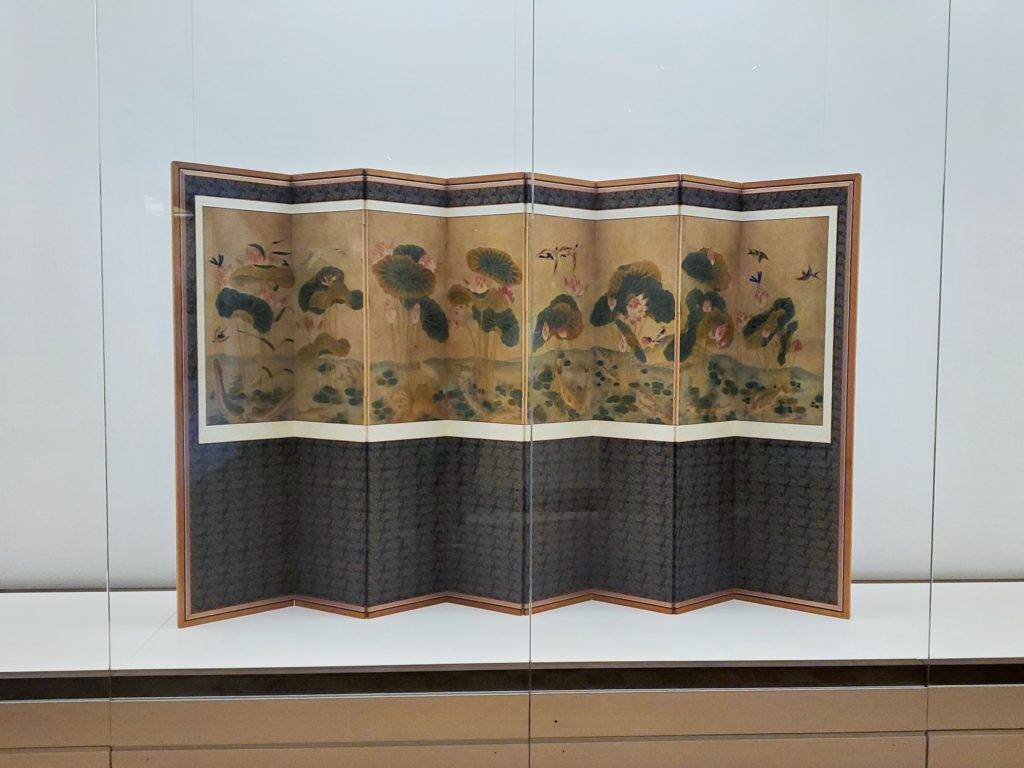
This floor primarily features artistic forms of everyday items from Asia and the Middle East, including pottery, sarcophagi, statues, bridal outfits, and even weapons!
2nd Floor: Great Hall, Rivera Court, American, Modern, Impressionism, Center for African American Art, European: Medieval and Renaissance, Ancient Greek and Roman, European: Inspired by Italy, Special Exhibitions, and ConTEMPORARY.
This floor focuses much more on artwork and paintings from all eras of American and European history. However, it also has some beautiful ancient statues and pottery dating back to Greece and Rome’s early days, and some epic armor on display in the Great Hall.
3rd Floor: Decorative Arts, Dutch Golden Age, Fashionable Living, and Era of Revolution.
The final floor focuses much more on style, including beautiful furniture, housewares and pottery, textiles, decorative panels, and more!
Art Beyond the Galleries
While you’re touring the DIA, there are a few things outside of the exhibits that you won’t want to miss.
The Woodward Avenue entrance has a large cast of the famous “Thinker” statue on display. This was created by the original artist, Auguste Rodin, in 1904 and donated to the museum in 1922.
Kresge Court is also a beautiful and unique area to explore. It’s primarily used as an event space, but it has a beautiful aesthetic anytime with lots of fun seating areas and beautiful skylights. It also has some amazing brickwork and ornate windows that you can see better from the 2nd and 3rd story overlooks.
Finally, the museum building itself is actually a beautiful work of art. It was built in the Beaux-Arts Style in 1927, emphasizing sculptural decorations, large arched windows, swags, cornices, and all sorts of bold elements.